How Rabbit Row Yarns & Haberdashery is Promoting "Sweaters for Good"
Friends Don't Let Friends Knit with Mystery Wool
The Rhinebeck Sweater. It’s a rite of passage and a labor of love for all knitters and crocheters. This year at Rabbit Row Yarns and Haberdashery, I’m adding a deeper layer of purpose to these prized handknit treasures. Rabbit Row has officially joined the Hudson Valley Textile Project’s Rhinebeck Sweaters for Good campaign—a movement that shifts the focus from just making your Rhinebeck sweater to thoughtfully sourcing your Rhinebeck sweater yarn. Sweaters for Good is a commitment to the farm-to-closet connection ensuring that the sweaters we wear are a direct investment in local shepherds, mills, and makers who are the heartbeat of our Northeast US regional fiber community.
For many local yarn shops, pivoting to offer regional fibers might feel like a major overhaul, but for Rabbit Row, it simply feels like opening the doors on a Monday morning. From the very first day, my mission has been woven from the same local wool Sweaters for Good is celebrating. I didn’t start Rabbit Row to be just another shop for traditional wholesale yarn; it has always been curated with sustainable (no synthetics or superwash), traceable yarn and fiber– with a highlight on locally-sourced. Through my time building relationships with regional mills and local farms, Sweaters for Good isn't a new trend I’m chasing—it’s the core of my business model. Read on to see how I’m incorporating the campaign into my shop.
Prioritizing NY/PA-grown Fiber
Rabbit Row has made an intentional commitment to source fiber directly from sheep, rabbit, goat, and alpaca farms throughout New York and Pennsylvania. By partnering with smaller heritage farms, we can offer a unique selection of yarn and spinning fibers. While we can’t stock 500 skeins of a single local line, we take pride in offering "sweater quantities" from nearly two dozen distinct breeds. This variety is a major draw for both our dedicated local makers and the many visitors passing through Corning. Sourcing regionally allows us to build relationships with our farmers, understand their practices, and learn the specific nuances of their fiber. This ensures we can guide every customer toward the perfect yarn, spinning, or felting fiber for their specific projects. We already use the Livestock Conservancy logo on our NY/PA shelf signage and will be rebranding to include the Sweaters for Good emblem so that it will be easily identifiable to customers. (Reach out if you have local yarn/fiber you’d like to offer at Rabbit Row!)
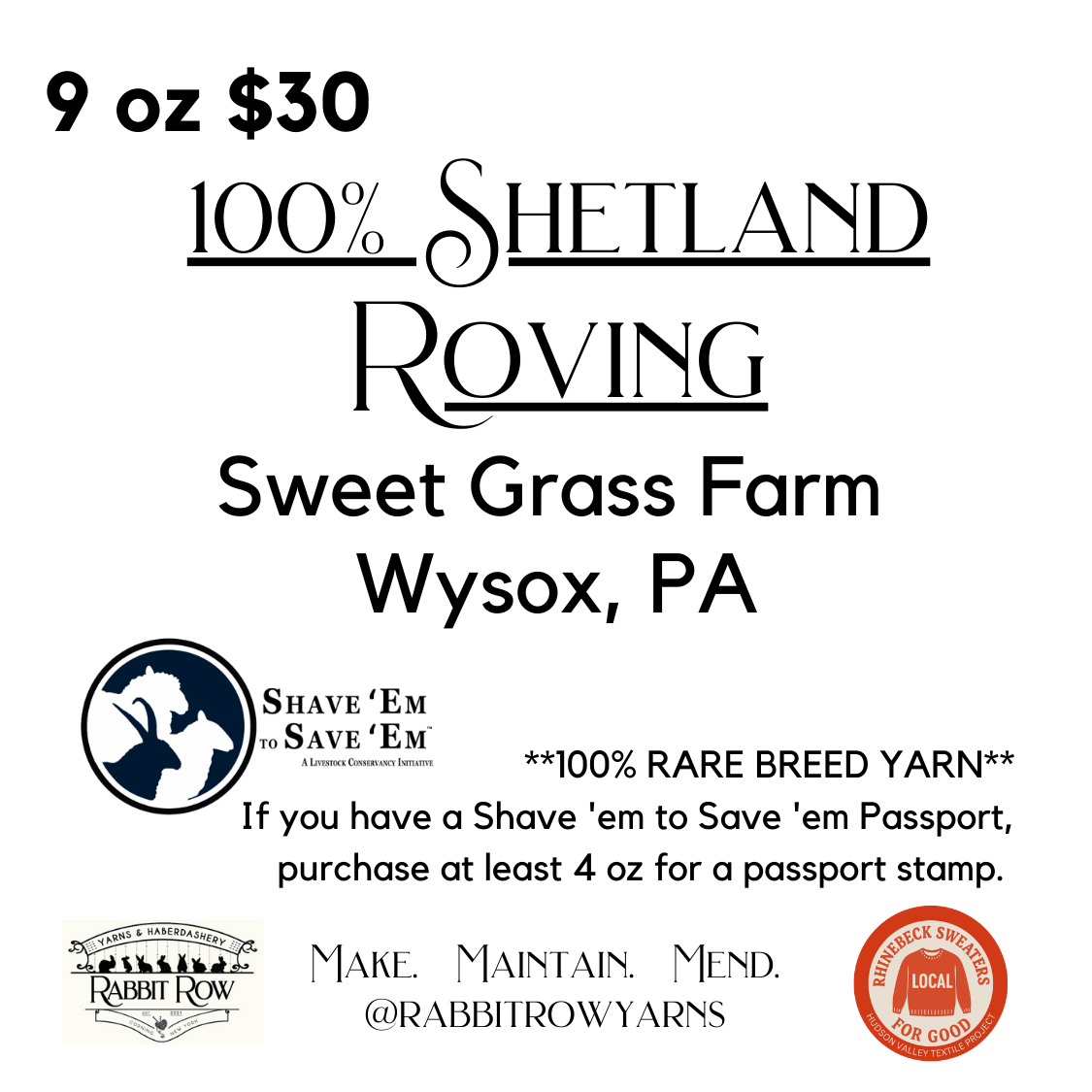
Shelf tags
Making Connections
To bring you closer to the source, we display posters above our shelves that feature flock photographs and the personal stories of farms, mills, or dyers. These posters, that carry the Sweaters for Good logo, illustrate the sustainability of our local fibers and offer a personal connection to the materials you bring home. While feel and color are usually the determining factors with each sale, connecting someone with the fiber they are purchasing will seal the deal. In fact, many customers take photos of these stories to keep with their projects or to include with a gift. Sharing this regional connection, we hope, will make consumers always want to know where their yarn/fiber (and other products) come from.
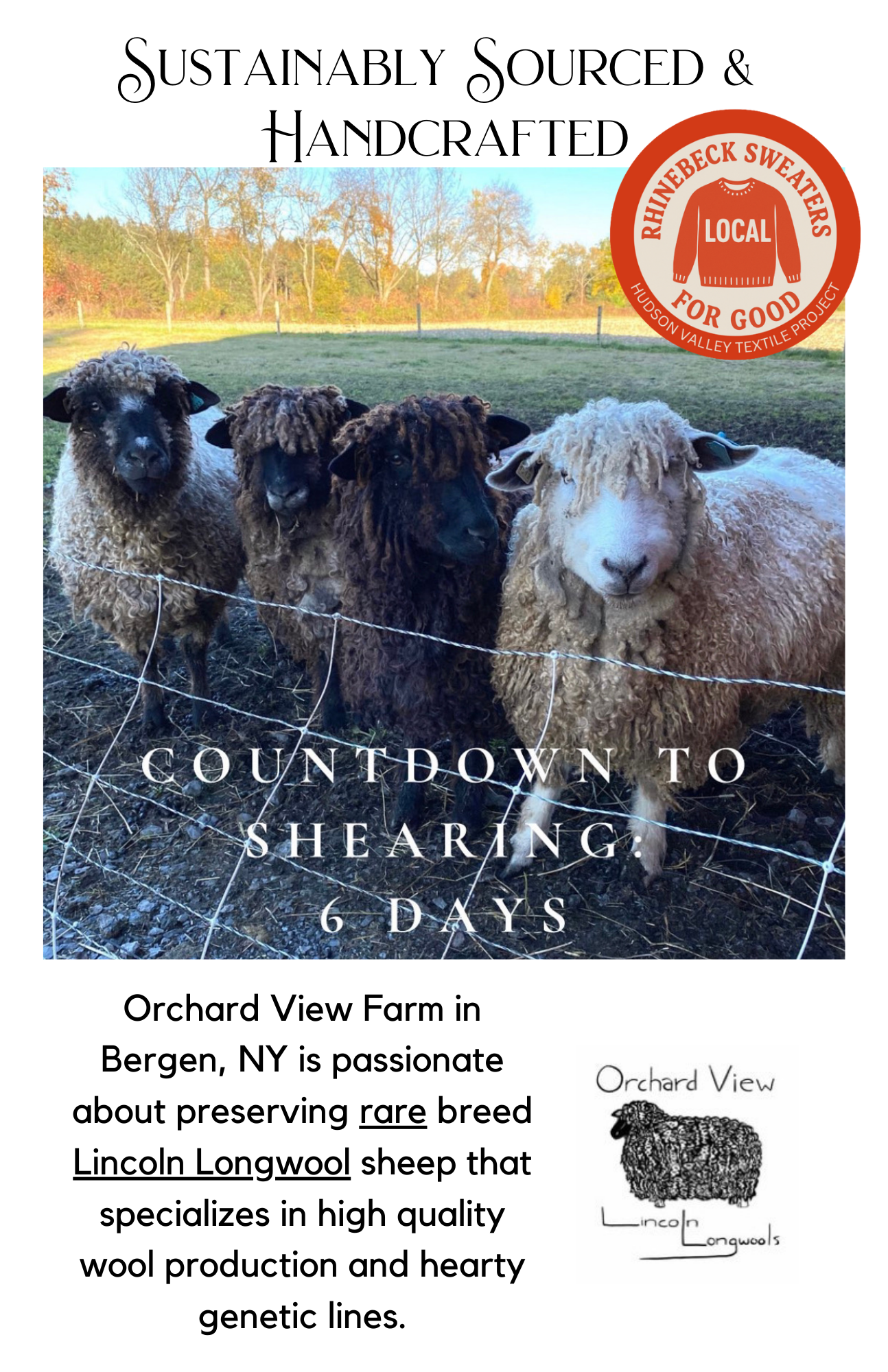
Poster displaying the Sweaters for Good logo
Economic Advantages and Environmental Benefits
Sweaters for Good can have the same effect in our industry as the popular Shop Small tagline does to promote small businesses. By bypassing global industrial supply chains, we help maintain the financial viability of small-scale heritage farms, preserving rare livestock breeds while making Corning a premier destination for "slow fiber" tourists who value traceability. Environmentally, sourcing regionally can reduce supply chain emissions by nearly 28% simply by shortening the "yarn miles" from the pasture to our shelves. (Many locals drop off supplies to my shop or at my husband’s office in nearby, Ithaca). Unlike mass-produced synthetic yarns, our regional natural fibers are renewable and ultimately biodegradable, keeping your creative legacy as clean and sustainable as the land that grew it.
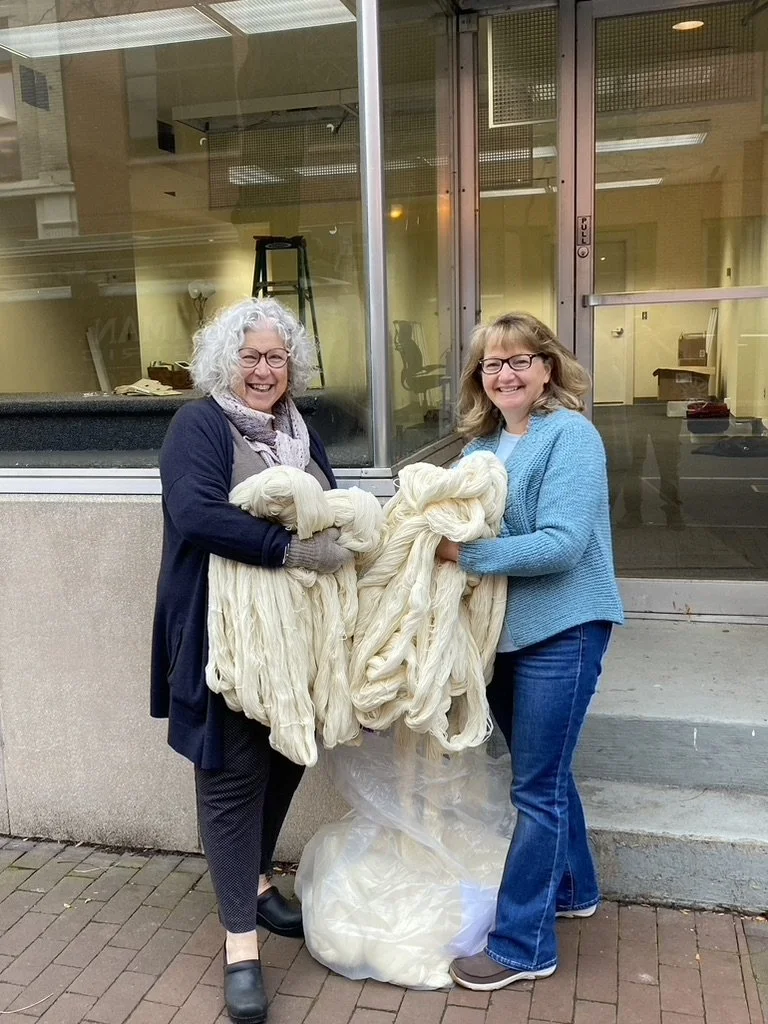
MJ delivering yarn to Rabbit Row
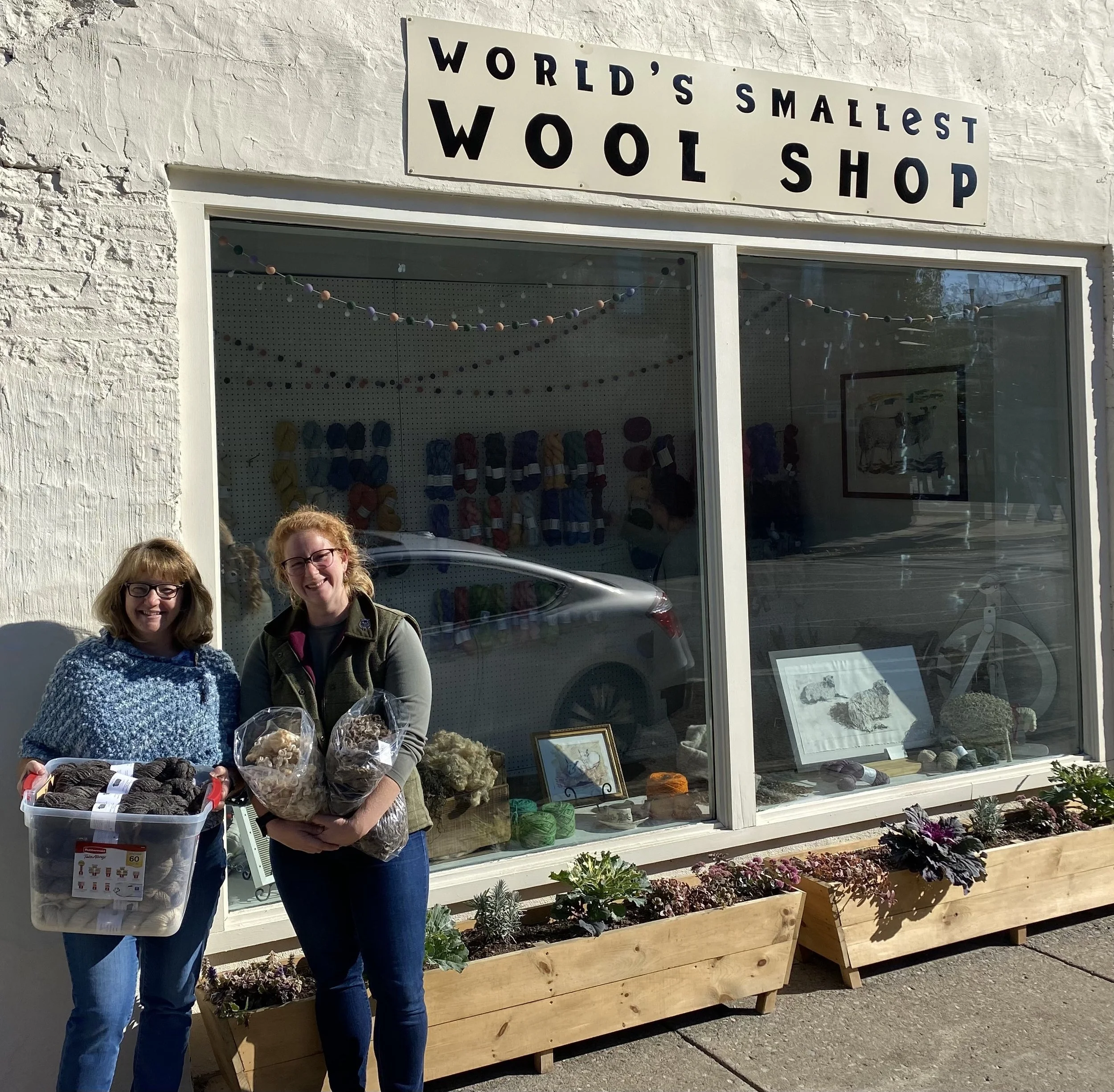
Barb picking up yarn from Emmaline
Other Ways Rabbit Row Will Promote Sweaters for Good
-
Incorporate the Sweaters for Good campaign into social media that highlights our local farms
-
Awaiting a Corning-grown yarn line from a friend’s small flock – scoured at Clean Fleece and spun at Battenkill Fiber Mill
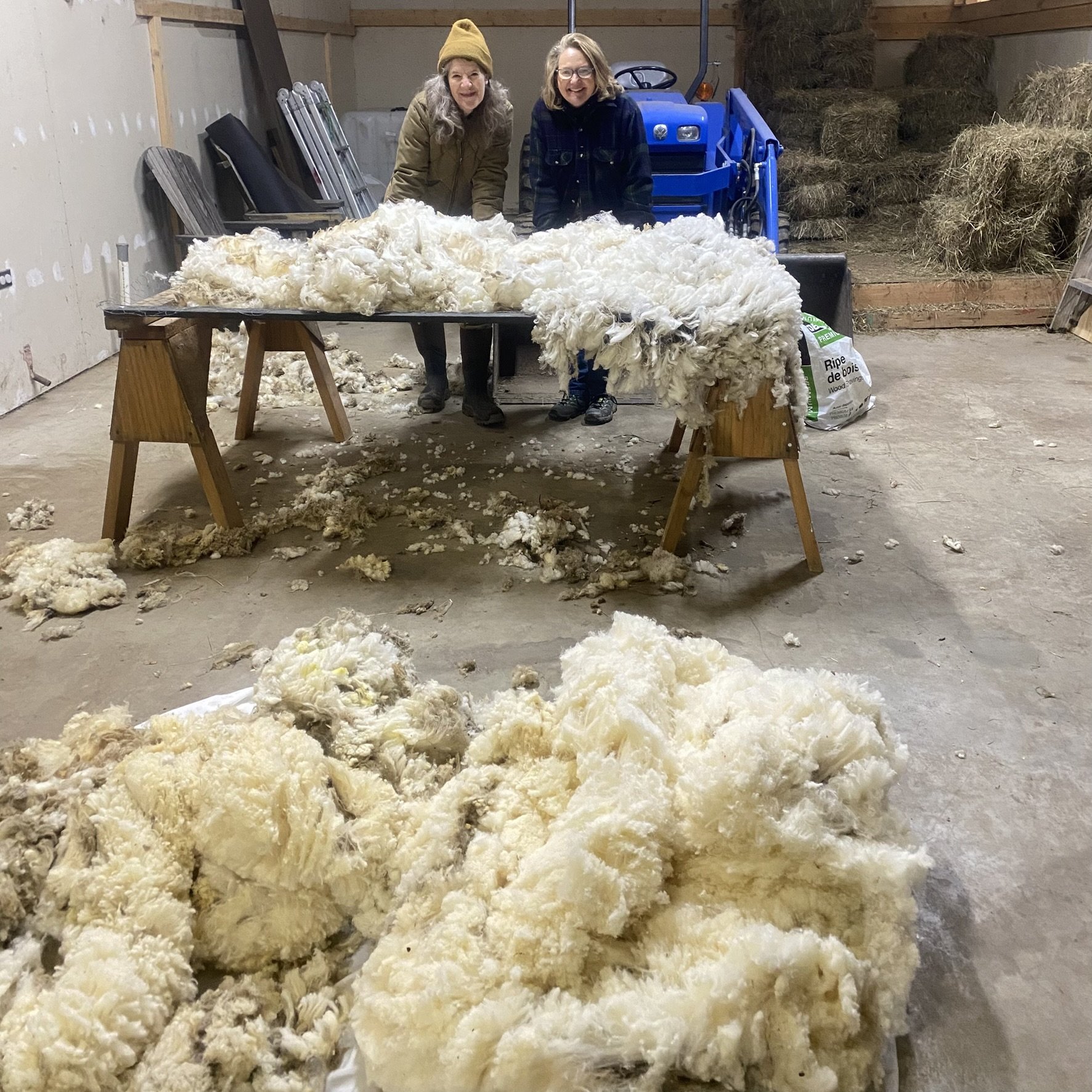
Photo of Barb and Kris Sayre on shearing day
-
Our classes use local wool for class materials, letting participants learn how to add local fiber into their making
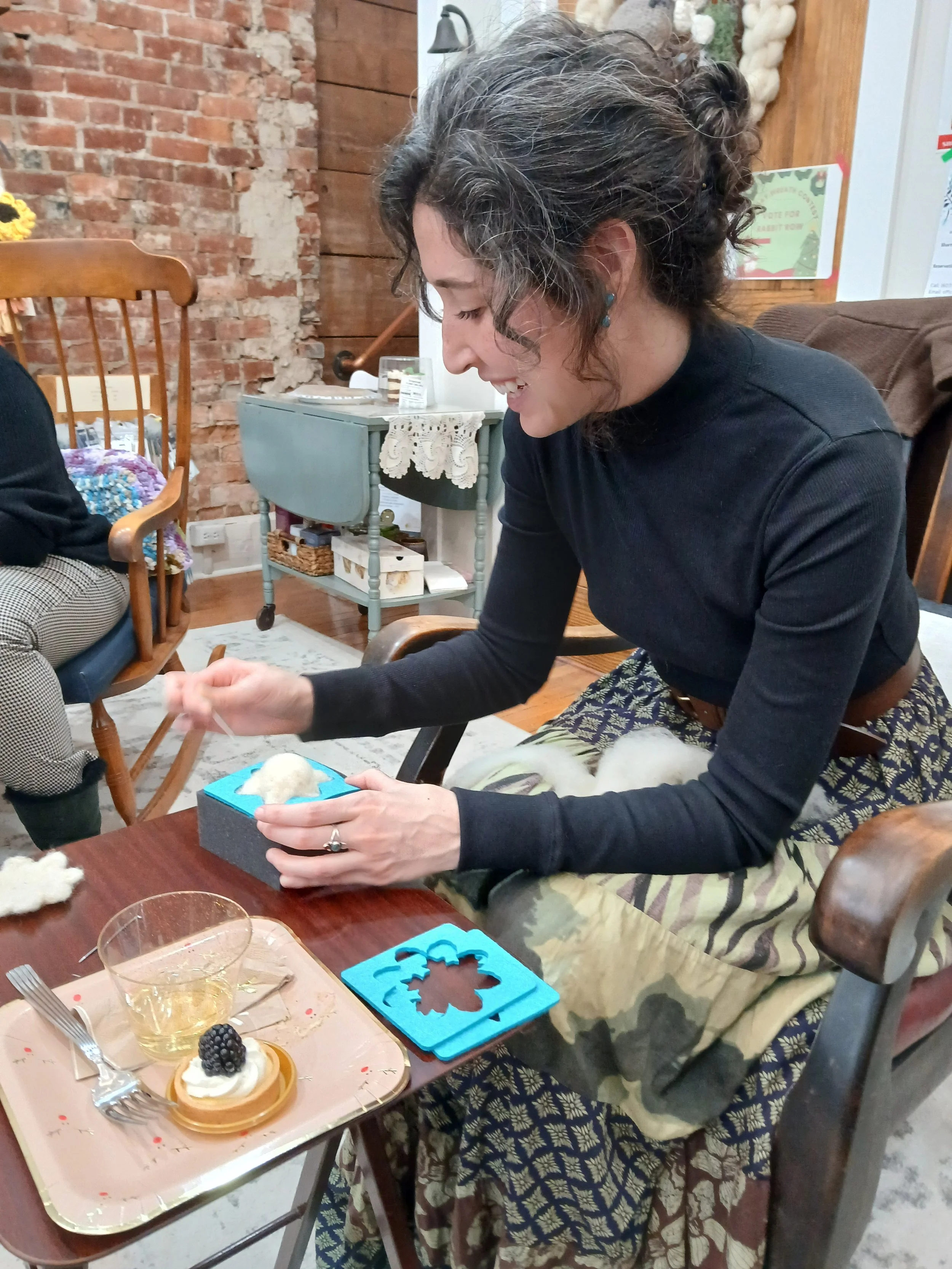
Needle felting class
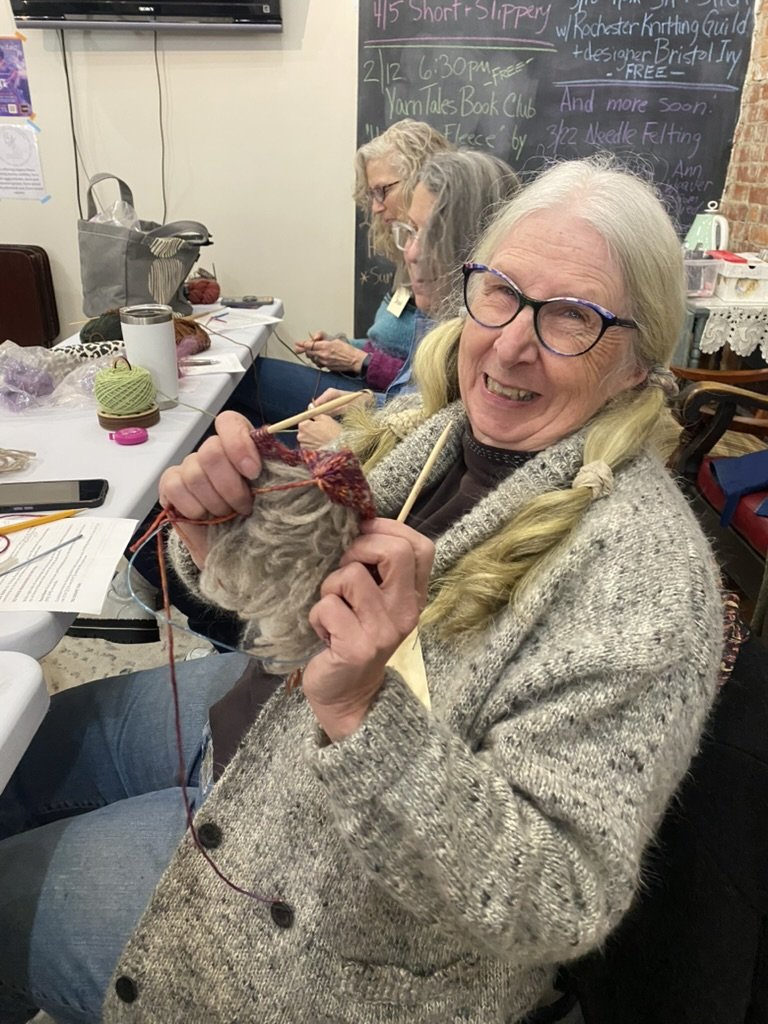
Thrummed mitten class
-
Continue to curate needle felting kits with local roving
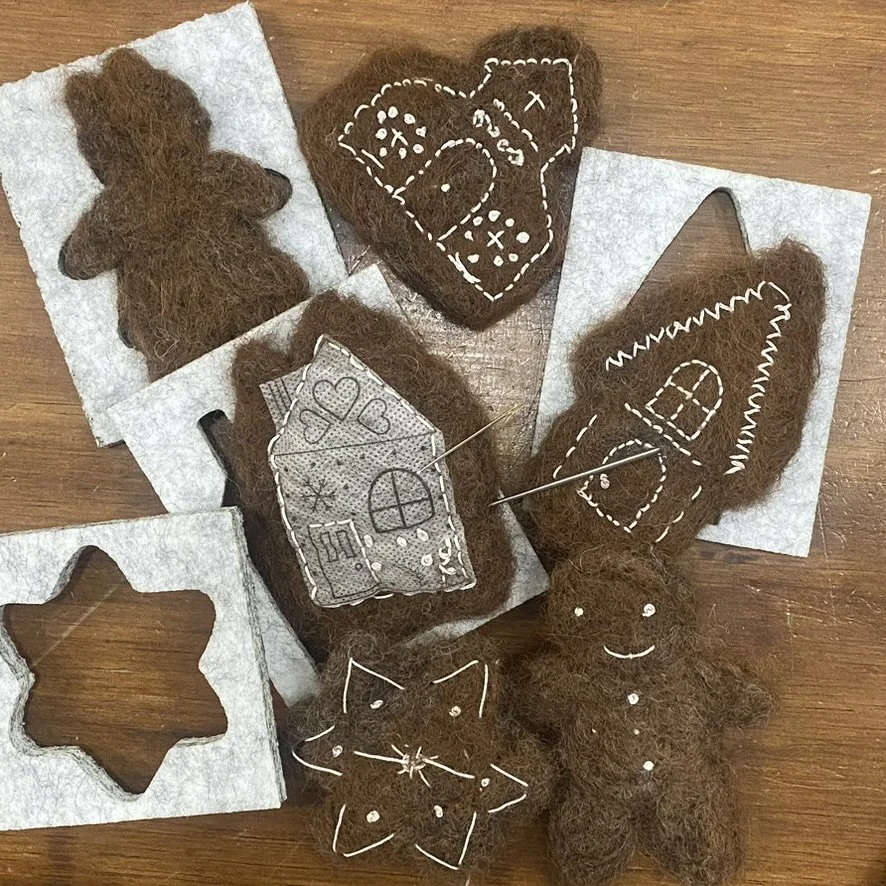
Photo of our gingerbread kits
-
Host a NY yarn knit-a-long in the fall – leading up to our annual shop bus trip to Rhinebeck
-
Continue our farm field trips with customers to educate them about the local supply chain
-
Participate in the NY Fiber Trail and encourage our customers to visit not just yarn shops but also the farms and mills on the trail
-
Yarn Tales – our shop book club selects non-fiction titles like Vanishing Fleece, illustrating the farm-to-shop supply chain
Written by Barbara Vassallo, owner/operator of Rabbit Row Yarns & Haberdashery, 24 E Market St, Corning, NY www.rabbitrowyarns.com
-
-

About the Shop
ShopWhat does it mean for a fiber craft product to be sustainably made? Not all are locally made, but there are elements of the supply chain that can be traced to fair treatment of the planet and its people. Simply making your own clothing or gifts = sustainability. For my shop, I also seek out NY, PA and US fiber products to support our domestic economy and reduce the carbon footprint for shipping.
Much like the slow food movement, Fibershed asks ‘do you know where your textiles come from?’ If you ask, I bet you will be surprised, and probably horrified, at the answers.
Rabbit Row Yarns & Haberdashery is a modern needle and fiber craft supply shop in Corning , NY's historic Gaffer District. Hand crafters will find a curated collection of sustainable materials and tools that are US-sourced and represent diversity and fair trade. Whether patrons knit, crochet, weave or dabble in haberdashery sister crafts like embroidery, spinning or weaving, they will find Rabbit Row is a welcoming community that especially fosters makers to try their hand at something new.
As the shop concept for Rabbit Row was developing, I began researching sustainable fiber materials, and quickly learned that most US wool is shipped across the world for processing and dyeing to places not so concerned with the environment or fair labor treatment – only to be shipped back to local yarn shops. This doesn’t even account for the synthetic yarns that make up inventory at most big box craft stores. Further reading led me to find the NY Textile Lab, Clara Parkes, and Local Fiber – there is so much going on in the sustainable fiber world nearby, and I wanted to be a bigger part of it.
“Do the best you can until you know better. Then when you know better, do better.” ― Maya Angelou.
-

Who are some of the rabbits in my row?
ContactI was taught to crochet by my namesake maternal grandmother. She lived 6 hours away in Connecticut, and I LOVED visiting her because she would teach me wonderful things (plus she had cable TV and a dog – we had neither.) She showed me how to crochet a top-down cardigan for a doll once. I didn’t quite pick up the technique, but I still have that small-scaled sweater tucked into my notions bag. I referred to it this past spring when I was crocheting the robe for an RBG doll.
My paternal grandmother taught me cross stitch and embroidery. She lived outside of Philadelphia, and I LOVED visiting because she would teach me other wonderful things. Her Golden Rule, that the backside of needlework should look as neat as the front, was difficult for me to master. She was patient and had the most defined touch with whatever she was creating. I realize that my fine motor skills hadn’t developed back then, and I’m happy now to take my time to ensure a perfect stitch.
With handcrafting, there is always a nostalgic whisper when exploring something new. I hope you find the same at Rabbit Row.
My maiden name, Haas, means rabbit in German; my mom Rosemarie's nickname was 'Ro'. Rabbit Row is a bit of mom and dad.
Rabbit Row encourages handicraft makers to learn where and how their supplies are made and add sustainably-sourced materials to their project bag as often as they can.
Photos courtesy of The Gaffer District

